summation
- Coca-Cola's stock price is in an undervalued area due to rising interest rates, weakening consumer sentiment, and health issues.
- Health issues are being raised, but the lineup is being expanded accordingly, and sales in developing countries are also growing, so there is ample room for growth.
index
[[Open]](javascript:;)[[Close]](javascript:;)
- Highlighting undervalued charm
- Health issue, is it a concern or a buying opportunity?
- Are there any stocks whose stock prices are any more stable even as dividend stocks?
- Coca-Cola is not just a company that sells cola.
##Highlights underrated charm
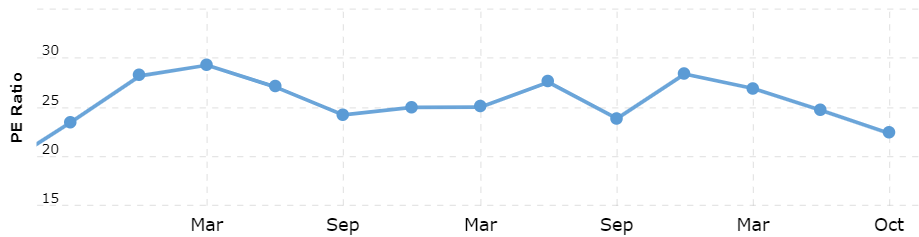 Coca-Cola PER band for the past year (Source: MacroTrends)
Coca-Cola's PER is around 21 times, and compared to 21-22 when it traded around 25-30 times, Coca-Cola's PER is heading towards 20. The current price level is the same as in 2016, excluding the sharp drop due to the coronavirus pandemic.
Could it be that the debt burden has increased due to rising interest rates, or that the company's profitability has decreased due to weakening consumer sentiment, resulting in a worsening of the fair valuation?
It is a very reasonable inference, but in conclusion, it is not so.
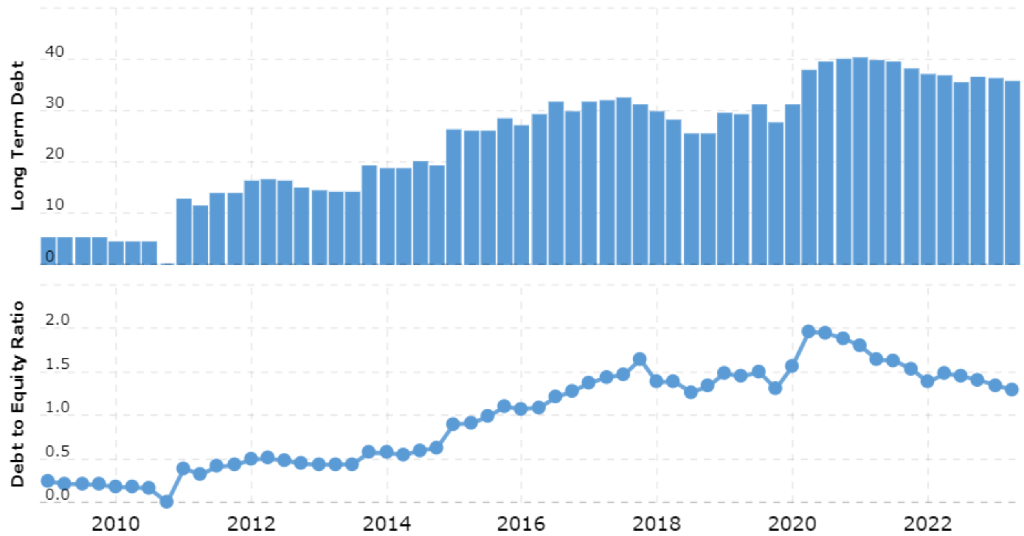 2009-3-30~2023-6-30 Debt-to-stock ratio (Source: MacroTrends)
It is true that the debt ratio has been continuously rising, but since the coronavirus outbreak in 2020, debt has remained flat or decreased, and the debt-to-stock ratio has also shown a clear trend and decreased, currently at the 2018 level.
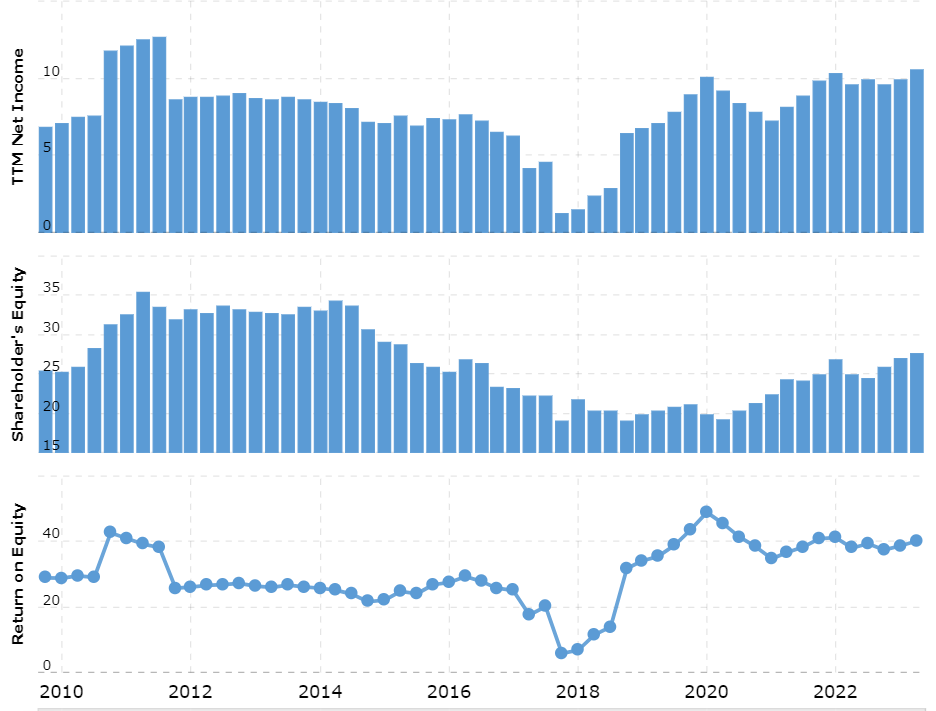
The same goes for profitability indicators. Although it does not show explosive growth like other growth stocks, Coca-Cola's ROE has maintained a high level of around 40% since 2019. I can't believe you can see numbers like this in a food and beverage company. It's surprising again.
##Health issue, is it a concern or a buying opportunity?
Many people are raising doubts about Coca-Cola's future growth potential based on the explosive growth of thediet foodmarket andhigh interestinobesity treatment. Coca-Cola is also significantly expanding its Zero beverage lineup, and recently launched**Coca-Cola Zero Zero', a product that contains no caffeine. Although Coca-Cola is making efforts to break away from its image as a 'bad drink', this may be a risk for Coca-Cola as most of its product lineup still contains sugar.
However, it is not difficult to argue against this. It is true that people's interest in health has increased, but people's main interest is still inalternativesrather thancore. This means that interest is focused onobesity treatmentrather thanhealth management through exercise, andzero drinksandsugar-free foodsrather thandiet management. Therefore, it seems likely that the decreasing demand for Coke will be transferred to Zero Coke rather than disappearing.
##Are there any stocks whose stock prices are any more stable even as dividend stocks?
The chart below shows the stock price trends of Coca-Cola and S&P 500 from January 2000 to September 31, 2023.
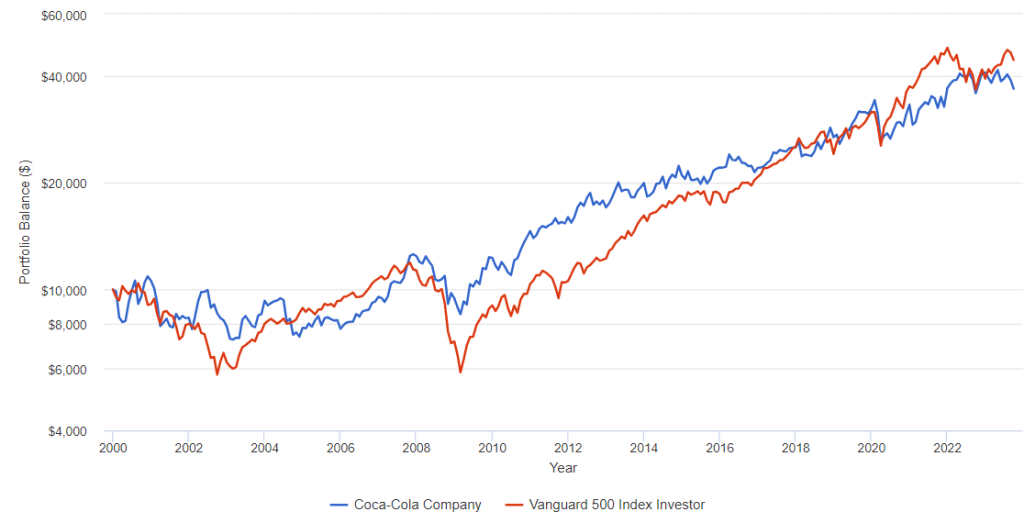 Comparison of Coca-Cola vs. S&P500 stock price trends from 2000-01 to 2023-9 (Source: PortfolioVisualizer)
The average annual return during the period was 5.65% to 6.49%, which is slightly less than the S&P 500, as shown in the graph. However, Coca-Cola's strength lies in its stability. Even during the major bad news in 2008, when even the S&P 500 was cut in half, Coca-Cola's decline was only 33%.
The volatility is 17.44% (KO) and 15.42% (S&P), showing a similar level of volatility as the S&P 500, a portfolio of 500 blue chip stocks, even though it is an individual stock, and the Market Correlation value, which indicates market sensitivity, is at the level of 0.40. This means that it is less affected by changes in the market.
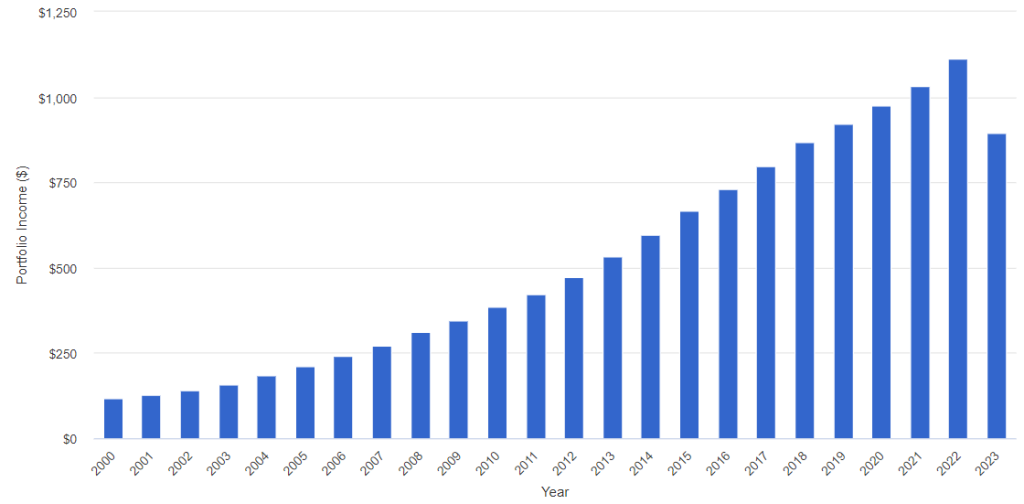
What is unwavering is the same with dividends. As a company that has continued to pay dividends for over 60 years, it did not waver even during the dot-com bubble or the 2008 crisis and continued to raise dividends to a meaningful level. This is also why you should pay more attention to Coca-Cola as its stock price falls.
##Coca-Cola is not a company that simply sells cola.
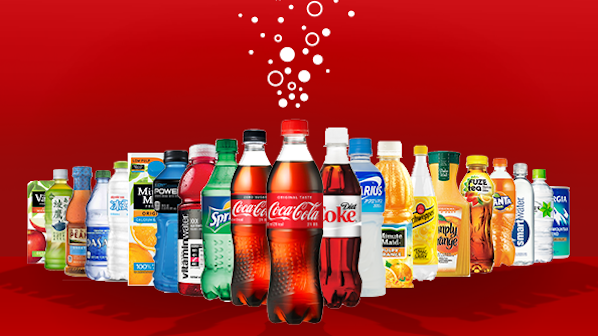 Coca-Cola product line (Source: Coca-Cola Korea)
Coca-Cola's growth should not be attributed solely to the North American market. It is no exaggeration to say that they carry all the beverages in the world, including Fanta, Sprite, and Powerade, as well as Monster Beverage, which is famous for its caffeinated drinks, Glaceau-Vitamin Water, which was once popular in Korea (a trend before the introduction of Zero drinks), Body Armor, a sports drink brand famous for investing in NBA and MLB players, and Costa Coffee, a coffee franchise like Starbucks. It is said that there are as many as 21 drinks with trillions in sales. This is why Coca-Cola sales are bound to be stable.
Another point to watch is that Coca-Cola is present in over 200 countries around the world. It is said that per capita beverage consumption in North America is $1,100, equivalent to3 cans per day. On the other hand, in Latin America it is $190 and in the Asia Pacific region it is $144, which is much lower. It is unknown whether all countries will converge on the US consumption, but it is very likely that beverage consumption will increase as income levels grow.