August 2026: Berkshire Hathaway's latest 13F filing with the SEC confirms a striking change. Having first taken a position in Alphabet (Google's parent company) in the third quarter of 2025, Berkshire grew its stake to roughly $37.7 billion within a year. Warren Buffett—who long viewed the technology industry as outside his circle of competence and later admitted it was a “mistake” not to invest in Google sooner—has now committed enormous sums to Alphabet. Why?
Checking the Portfolio: Reviewing the 13F Filings
Rather than speculate, let's start with the official data. Berkshire's Alphabet holdings as disclosed on SEC EDGAR are as follows.
| Period | Class A Shares | Class C Shares | Approx. Value |
|---|---|---|---|
| 2025 Q3 | 17,846,142 | - | $4.3B |
| 2025 Q4 | 17,846,142 | - | $5.6B |
| 2026 Q1 | 54,249,798 | 3,585,215 | $16.6B |
| 2026 Q2 | 78,791,167 | 27,188,433 | $37.7B |
Three points stand out. First, Berkshire never trimmed the position after the initial purchase and dramatically scaled up its buying in 2026. Second, it bought not only Class A shares but also the non-voting Class C shares. Third, a 13F only shows quarter-end holdings, so it cannot tell us the exact purchase dates and prices—or why the purchases were split across two share classes.
Reason 1: The Boundary of “Businesses I Understand” Has Moved
Buffett's principle is to invest in companies he can understand. The core of that principle is not technology itself but the predictability of the profit model.
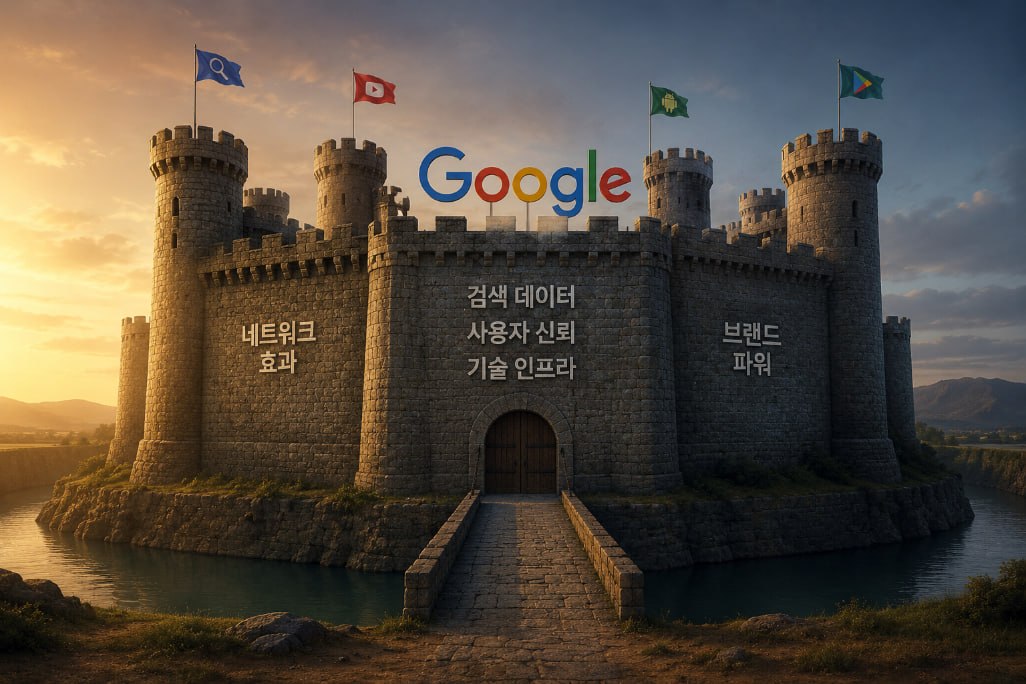
Google's core profit structure is fairly simple. When users search, ads appear alongside the results, and advertisers pay Google to reach potential customers. This model has generated cash steadily for more than two decades. Railroads and search advertising differ as businesses, but they share the same economic moat: networks and scale already in place make it hard for later competitors to break in.
Viewed through the lens of network effects and switching costs—the moat—Google Search is free to consumers, but for advertisers it is the essential toll road for reaching customers.
Reason 2: Valuation — The Moment of Buying a Great Company at a Fair Price
One of Buffett's best-known principles is that “it's far better to buy a wonderful company at a fair price than a fair company at a wonderful price.”
When Berkshire first established its Alphabet stake in Q3 2025, the AI search race and antitrust regulation were weighing on Alphabet's valuation. The exact purchase dates and prices cannot be verified from 13F filings alone, but Berkshire may have judged the price to be one worth accepting those uncertainties.
At the time, Berkshire had built up a large cash pile through massive stock sales. A portion of that money flowed into Alphabet, a company with high cash generation and a strong moat.
Reason 3: The Possibility That AI Becomes a Second Moat
The fear that “AI could replace search” is Alphabet's core risk, but seen from another angle, Alphabet already possesses much of what it needs to navigate the AI transition.
First, Alphabet is one of the few companies that owns both its own AI model, Gemini, and its own AI accelerator, the TPU. Second, the data and user touchpoints accumulated through search and advertising can serve as a foundation for improving and deploying AI services. Third, Google Cloud (GCP) and YouTube could be direct beneficiaries of growing AI demand. What Berkshire saw, then, may not have been simply “Google under threat from AI,” but an Alphabet equipped with the assets to extend its moat into the AI era.
Reason 4: “I Initiated It” — Buffett's Own Decision
Many in the market interpreted this investment as the first major decision of new CEO Greg Abel. But in a July 2026 CNBC interview, Buffett stated outright that “I initiated it,” making clear that he had led the Alphabet investment himself. He also explained that he and Abel do not do things they disagree on, and that Abel is now the final decision-maker.
In the same interview, Buffett said that “the trick is to find businesses that earn high returns on capital over a long period.” That he invoked this principle in a conversation about the Alphabet investment suggests Alphabet's high returns on capital fit his investment criteria. According to external data provider StockAnalysis, as of August 24, 2026, Alphabet's return on invested capital (ROIC) was 24.93% and its weighted average cost of capital (WACC) was 10.78%.
Buffett singled out the hundreds of billions of dollars that Google and its competitors are pouring into AI as a key variable. In light of the investment principle above, the implication is that a crucial test was whether Alphabet can sustain high returns on capital even after this enormous AI spending. Berkshire also participated in a $10 billion private placement supporting Alphabet's AI infrastructure investment. Buffett's admission that not investing in Google sooner was a “mistake” ties into this same judgment.
Fit with the Existing Portfolio
Berkshire's Apple investment showed that a technology company with a strong brand, recurring consumer usage, and high cash generation can fit within Buffett's investment principles. The Alphabet investment shares that logic: what mattered was not technology per se, but the economic moat and cash flows.
Question Buffett's Choice Too: A Risk Check
For balance, consider the other side. Key risks include a potential structural breakup from antitrust litigation, a faster-than-expected shift to AI search, and a cloud business that still trails AWS and Azure. Berkshire's buying does not make these threats disappear. But it does suggest Berkshire judged the price at the time to be one worth bearing those uncertainties.
Nor did Buffett name Alphabet as Berkshire's top pick. He said he prefers at least four or five other Berkshire holdings over Alphabet. He regarded Alphabet as a significant investment—but not Berkshire's favorite holding.
Conclusion: The Investment Principles Haven't Changed
The interpretation that “Buffett changed his principles and bought a tech stock” is only half right. More precisely, he found in Alphabet the things he has always prized: predictable cash flows, a deep moat, and a reasonable price. If you can explain a company's moat, whether that moat is made of rails or a search box is beside the point.
At $37.7 billion, the stake accounts for roughly 12.6% of Berkshire's 13F equity portfolio in Q2 2026. It is now a core holding, hard to dismiss as a toe-dip. This investment shows that even after the CEO succession, Buffett's investment judgment and long-standing principles continue to shape Berkshire's portfolio decisions.
References
- Berkshire Hathaway Q3 2025 13F-HR
- Berkshire Hathaway Q4 2025 13F-HR
- Berkshire Hathaway Q1 2026 13F-HR
- Berkshire Hathaway Q2 2026 13F-HR
- CNBC, Warren Buffett tells CNBC he initiated Berkshire Hathaway's investment in Alphabet, 2026-07-15
- StockAnalysis, Alphabet Statistics — accessed August 24, 2026
---
This post is an analysis based on SEC filings and public interviews. It is not a recommendation to buy or sell any security.