A Look at George Soros's AI Investment Views Through the Soros Fund 13F
The 13F filings that institutional investors submit to the U.S. Securities and Exchange Commission (SEC) to report their quarterly stock holdings record, in full detail, which industries an investor is focused on. Based on the original Q2 13F filed by Soros Fund Management on August 14, 2026, this article reads the numbers to see how "Wall Street legend" George Soros views the AI industry.
A 13F is a snapshot showing only holdings as of quarter-end. Exact buy and sell dates and prices are not disclosed, and filings must be submitted within 45 days after the quarter closes. Thank you for keeping these limitations in mind as you read.

The shift in AI investing revealed by Soros Fund's Q2 13F.
Soros Fund Portfolio Changes
Let's start with the changes in the overall portfolio.
| Category | 2026 Q1 (as of 3/31) | 2026 Q2 (as of 6/30) | Change |
|---|---|---|---|
| Reporting entity | Soros Fund Management LLC (CIK 1029160) | Same | — |
| 13F filing date | 2026-05-15 | 2026-08-14 | — |
| Total portfolio value | Approx. $9.12B | Approx. $8.14B | Approx. -10.7% |
| Number of holdings | 263 | 266 | +3 |
Total assets shrank by roughly 11% in a single quarter. But size was the only thing that decreased. The makeup of the AI-related holdings changed substantially, and that direction is the heart of this article.
A Closer Look at Soros Fund's AI Investment Weighting
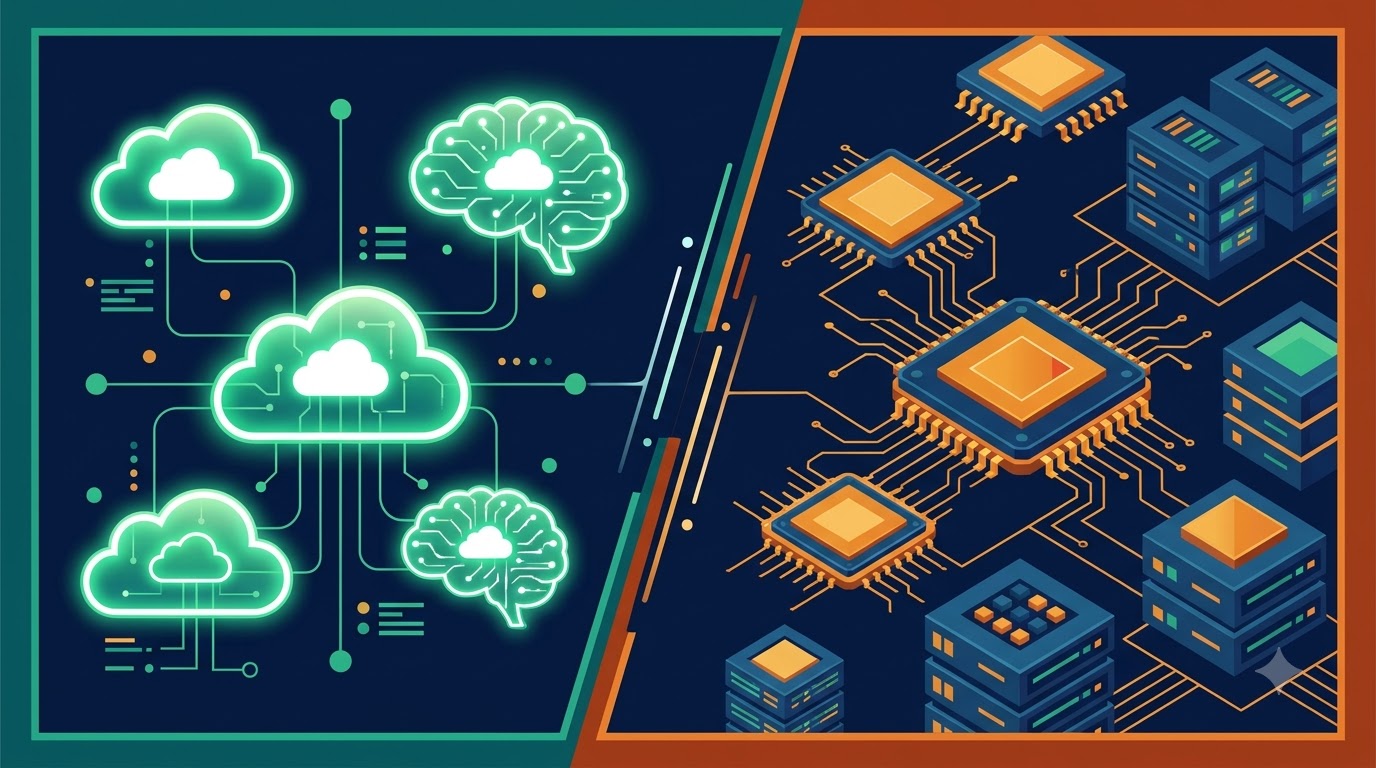
Soros Fund's AI investments fall into two pillars: software and hardware.
There is no official "AI investment" category in a 13F. So for this article, I split Soros Fund's AI-related holdings into two groups—hardware and software—to calculate exposure.
AI Hardware (HW)
These are companies that directly build or own the physical infrastructure that powers AI.
- NVIDIA (NVDA): GPUs and AI semiconductors
- TSMC (TSM): Contract manufacturing of AI chips
- Super Micro Computer (SMCI): AI servers and rack systems
- Nebius Group (NBIS): Builds and operates its own GPU data centers and rents out computing power. It may look like a software company, but because it owns and operates physical assets, I classified it as hardware.
- Digital Realty (DLR): Data center REIT
| Stock | 2026 Q1 | 2026 Q2 | Change |
|---|---|---|---|
| NVIDIA | $187.2M (1,073,206 shares) | $213.0M (1,064,635 shares) | Shares -0.8%, value +13.8% |
| TSMC | $176.5M (522,318 shares) | $249.4M (522,158 shares) | Shares flat, value +41.3% |
| Super Micro Computer | Not held | $111.5M (2,175,408 shares) | New position |
| Nebius Group | Not held | $85.6M (310,000 shares) | New position |
| Digital Realty | Not held | $96.9M (539,618 shares) | New position |
| Total | Approx. $364M (4.0% of portfolio) | Approx. $756M (9.3% of portfolio) | Approx. 2.1x |
AI Software (SW)
These are companies that generate revenue by integrating AI into their own services and business models.
- Amazon (AMZN): AWS and retail
- Alphabet (GOOGL): Search and cloud
- Microsoft (MSFT): Cloud and software
- Oracle (ORCL): Enterprise cloud and database software
- Meta Platforms (META): Social networking and advertising services
| Stock | 2026 Q1 | 2026 Q2 | Change |
|---|---|---|---|
| Amazon | $405.2M (1,945,789 shares) | $281.8M (1,182,529 shares) | Shares -39.2% |
| Microsoft | $78.5M (211,966 shares) | $70.9M (189,971 shares) | Shares -10.4% |
| Meta Platforms | $19.8M (34,607 shares) | $12.3M (21,776 shares) | Shares -37.1% |
| Alphabet | $165.0M (573,929 shares) | $213.1M (596,286 shares) | Shares +3.9% |
| Oracle | $26.1M (569,360 shares) | $33.1M (738,395 shares) | Shares +29.7% |
| Total | Approx. $695M (7.6% of portfolio) | Approx. $611M (7.5% of portfolio) | Approx. -12.0% |
Combining the Two Groups
| Category | 2026 Q1 | 2026 Q2 | Change |
|---|---|---|---|
| AI HW total | Approx. $364M (4.0% of portfolio) | Approx. $756M (9.3% of portfolio) | +108% |
| AI SW total | Approx. $695M (7.6% of portfolio) | Approx. $611M (7.5% of portfolio) | -12% |
| AI HW : AI SW mix | 34 : 66 | 55 : 45 | Reversed in favor of HW |
The AI hardware weighting jumped from 4.0% to 9.3% in a single quarter. The mix within AI-related holdings also flipped from HW 34 : SW 66 to HW 55 : SW 45.
In other words, Soros appears to have shifted the central axis of his AI investments by selling AI software companies and buying AI hardware.

Capital unwound from software moved into hardware infrastructure.
Key Takeaways by Stock

Examining stock-level changes based on the original filing data.
NVIDIA and TSMC: The Twin Pillars of AI Hardware
The physical infrastructure where AI capex is concentrated.
The fund's NVIDIA share count slipped about 0.8%, from 1,073,206 to 1,064,635 shares. The rise in reported value largely reflects the stock's price appreciation. Rather than fresh buying, the more accurate reading is that the fund maintained an existing core position and kept it as the backbone of its AI HW exposure. At the same time, it holds put options on 400,000 NVIDIA shares (about $80M), managing downside risk.
TSMC's share count was held at 522,158 while its reported value grew 41%, from $176.5M to $249.4M. Exposure to the very top of the AI chip supply chain simply captured the market's revaluation. The fund also holds TSMC put options (about $81M), so conviction and hedging coexist.
Where the Money Came From: Three AI SW Stocks Sold
Amazon was cut by roughly 40% in share count in a single quarter, Meta by 37%, and Microsoft by 10%. The sales of those three names amounted to about $83 million of net selling across the AI SW sector as a whole.
That said, not every software company was trimmed equally. Alphabet was increased 3.9% and Oracle expanded by nearly 30%. The reading is that the fund kept its search and cloud exposure while adjusting weights first in the names with stronger e-commerce and social-media characteristics.
CoreWeave Put Options Reduced
Soros Fund has held large put options on CoreWeave—that is, bets on a decline. The CoreWeave puts, worth about $220M at the end of Q1, were down about 70% to $64.7M by the end of Q2.
A reduction in put options cannot be read the same way as buying the underlying stock. But it is clear the fund pulled back much of its strong bearish bet on the AI computing industry. Viewed alongside the new HW stock purchases, it reinforces the interpretation that the portfolio's center of gravity is shifting.
A Closer Look at Soros Fund's AI Investment Views
The last primary public record from George Soros himself on AI is a June 2023 column. Naming AI the number-one driver of the "polycrisis," ahead of climate change and the war in Ukraine, he wrote that he is "instinctively opposed to AI" and that "AI helps closed societies and poses a mortal threat to open societies." Since then, having handed control to his son Alex at age 95, his direct comments are hard to find; the figure who now speaks for the fund's view of AI is Dawn Fitzpatrick, CEO and CIO of Soros Fund Management.
June 2023 — early AI boom, Bloomberg Invest. Fitzpatrick said, "The real winners are the applications—that is, the cloud and high-performance chip companies. But these stocks already reflect exponential, compounding growth in their prices. We are not going to chase them." At the same time, she acknowledged the technology's growth potential, saying "AI's capabilities will grow exponentially." Her judgment: the direction was right, but the price was expensive.
March 2026 — a maturing AI boom, Bloomberg Invest. Three years later, the message shifted toward warnings.
- "The next 18 to 24 months will be a painful period for investors" — because the shock of AI repricing the software sector overlapped with geopolitical risk.
- On the decline in software valuations, she called it "a structural revaluation that is deserved."
- While fears of AI disruption spread into the private credit market and redemption requests are rising, she saw the widening liquidity premium as an opportunity for those supplying cash. Indeed, soon after her warning, major private credit funds such as BlackRock and Cliffwater imposed redemption gates.
- Saying "AI has no effect on inflation now, but eventually it will," she argued that a 50bp rate adjustment would not change the flow of AI capex, so the Fed should let the boom run its course to some degree.
- On the wave of large AI company IPOs scheduled for 2026, she said she feels "wary."
From 2023's "we acknowledge the growth but won't chase expensive prices" to 2026's warnings of "revaluation pain and bubble signals." The perspective running through both statements is clear: doubt the possibility of an AI bubble, but do not deny the real demand for hardware.
AI Investment Views Through Recent 13F Trends
Filings are a more honest record than words. Lining up the last four quarters of 13Fs, the attitude toward AI shows up in the numbers.
| Filing quarter | Submitted | Key AI-related moves |
|---|---|---|
| 2024 Q4 | February 2025 | Added the semiconductor ETF (SMH) as the portfolio's largest holding; new purchases of NVIDIA, Broadcom, and Nebius / fully exited Microsoft and Alibaba |
| 2025 Q4 | February 2026 | New positions in Broadcom and Tesla (about $69M), new $580M energy sector put options, reduced China leverage — covered by the media as an "AI pivot" |
| 2026 Q1 | May 2026 | Added 400,000 NVIDIA shares (+61%), increased TSMC by +49%, kept the hedge sleeve—S&P 500 put options, convertible bonds, and the like—at about 40% |
| 2026 Q2 | August 2026 | Expanded AI HW total to about $756M (2.1x), new NVIDIA put options, sold Amazon (-39%) and Meta (-37%), CoreWeave put options -70% |
Three principles emerge from this pattern.
First, the investment focus keeps moving down the industry stack. After unwinding first-generation big tech (Microsoft, Alibaba), the fund moved into semiconductors and cloud, and this quarter it came down further into the physical infrastructure layer—servers, compute, and data centers. The portfolio has simply tracked the AI industry's bottleneck as it shifted from SW to HW.
Second, bullish bets always come with hedges. In the quarter it sharply increased NVIDIA, it also added TSMC put options; and this quarter, having expanded AI HW by 2.1x, it newly added NVIDIA put options (covering 400,000 shares). Even with conviction on direction, limiting tail risk with options is this fund's consistent approach.
Third, the AI SW reduction is not an exit but funding. The overall portfolio shrank 11%, but AI HW grew 2.1x. The proceeds from selling Amazon, Microsoft, and Meta went straight into buying SMCI, Nebius, and Digital Realty. This is not "leaving AI" but a rotation within the AI industry—selling SW to buy HW.
For reference, the AI weighting varies depending on classification criteria. Counting only the four core HW names (NVDA, SMCI, NBIS, DLR) gives about $507M (6.2%); the five HW names give about $756M (9.3%); and including all of SW brings it to about $1.37B (16.8%). When interpreting a 13F, it is important to state which stocks are included.
Reference: Options Positions
- NVIDIA put options: approx. $80.0M (400,000 shares) — stock maintained + downside hedge
- TSMC put options: approx. $81.2M (170,000 shares) — reduced from $126.7M in Q1
- CoreWeave put options: approx. $64.7M (650,000 shares) — sharply reduced from $220.0M in Q1
- No CoreWeave call options; stock position of $29.9M (300,000 shares)
A decrease in put options should not be interpreted the same way as buying the underlying stock. Still, the fact that positions moved toward trimming bearish bets offers a clue to a shift in the investment view. A 13F discloses only the notional underlying share count of options, so the actual premiums paid or the scale of risk may differ from the reported amounts.
Conclusion

Soros Fund moving between two faces: warning and investing.
Soros Fund's Q2 2026 13F cannot be summed up in one line as "bought more AI."
1. Overall size reduced about 10.7%, from $9.12B to $8.14B 2. AI SW trimmed: Amazon -39%, Meta -37%, Microsoft -10% 3. AI HW expanded: new entries in SMCI (servers), Nebius (GPU cloud), and Digital Realty (data centers); TSMC and NVIDIA maintained 4. NVIDIA managed with stock held plus put-option hedging 5. AI HW weighting expanded from about 4.0% to about 9.3%, and the mix within AI holdings flipped in favor of HW
This reallocation was less about indiscriminately increasing AI exposure and closer to moving money into the bottleneck segments of the AI industry (semiconductors → GPUs → servers → compute → data centers). Soros himself has warned of the risks AI poses to civilization, while his fund is putting real money into AI hardware and managing downside risk with options. The gap between the words of warning and the act of investing can be seen as a case of "reflexivity"—the concept Soros emphasized throughout his life—playing out in today's AI market.
References
- SEC EDGAR, Soros Fund Management LLC 13F-HR information tables (Q1: filed 2026-05-15; Q2: filed 2026-08-14) — holding figures in this article were tallied directly from these filings
- Bloomberg, "Soros CIO Says Markets Will Be Painful for More Than a Year" (2026-03-03) — Fitzpatrick's Bloomberg Invest 2026 remarks
- Fortune, "How top investors are viewing A.I. investing" (2023-06-08) — Fitzpatrick's Bloomberg Invest 2023 remarks
- George Soros, "Can Democracy Survive the Polycrisis?" Project Syndicate (2023-06-06) — Soros's own AI-related column
- The Korea Economic Daily Magazine, "'Act 2 of AI is coming'… George Soros bets on semiconductors and cloud" (2025-06) — 2024 Q4 13F moves
- NewsPim/GAM, "Soros's double-edged AI bet ①: two big-tech names the billionaire newly added" (2026-02) — 2025 Q4 13F moves
Disclaimer: This article is an analysis of filing data and public statements, not a recommendation to buy or sell any specific stock. The "AI HW" and "AI SW" classifications are the author's own definitions, not official categories. Investment decisions and responsibility rest with each investor.